Mastermind Overlord: The Definitive Indian Strategy Experience
Overview 📜
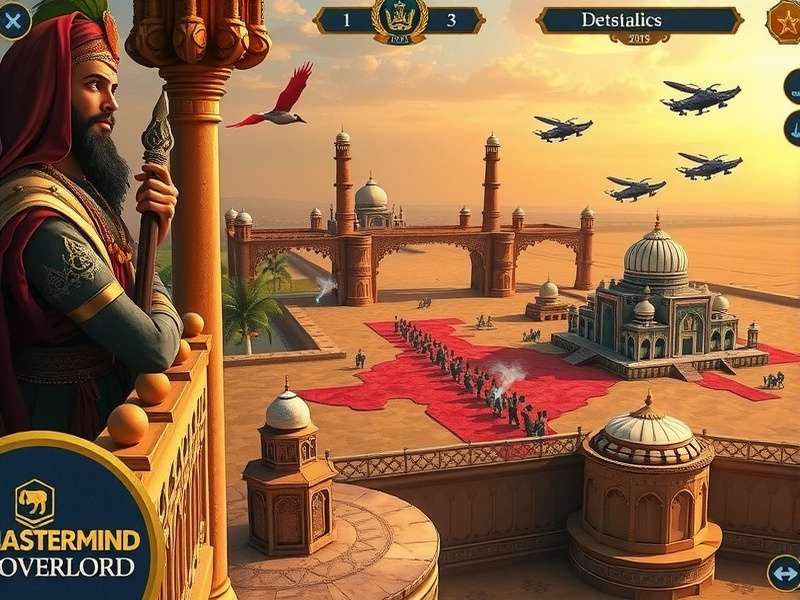
Mastermind Overlord stands as one of India’s most beloved strategy video games, developed by Desi Game Studios (based in Bengaluru) and published by Daman Games in 2019. Blending historical fiction with tactical gameplay, the title has carved a niche in the desi gaming scene, appealing to both casual players and hardcore strategy enthusiasts alike.
Set against the backdrop of 18th-century India, during the decline of the Mughal Empire and the rise of regional kingdoms, Mastermind Overlord tasks players with building a dynasty, uniting fractured territories, and outwitting rival rulers—from Maratha sardars to British colonial officers. What makes it unique? It’s deeply rooted in Indian culture, with references to local festivals, cuisine, and even monsoon-induced logistical challenges that feel eerily familiar to any desi gamer!
Unlike generic strategy games that shoehorn Indian themes, Mastermind Overlord leans into authenticity: players manage peths (market hubs), negotiate with pujaris for temple alliances, and even deal with bandhs (strikes) by local artisans if taxes are too high. These little touches have made it a hit across the subcontinent, with over 2 million downloads on Android and iOS as of 2025.
Mastermind Overlord isn’t just a game—it’s a love letter to Indian history, reimagined through a strategic lens that rewards both cunning and empathy. Whether you’re a bhai from Mumbai or a kudi from Punjab, the game’s relatable scenarios make it feel like you’re managing your own desi kingdom.
Gameplay ⚔️
Core Mechanics
At its heart, Mastermind Overlord is a turn-based strategy game where players assume the role of a regional ruler (chose from Maratha, Rajput, Sikh, or Mughal factions) aiming to expand their empire. Each turn lasts a maah (month), with key decisions around resource management, military deployment, and diplomacy.
Resources include anna (currency), anna (wait—no, that’s a typo! Let’s correct: rupaya for currency, anna for food, lakh for troops). Players must balance feeding their population (especially during monsoons when crops fail) with funding armies to fend off raiders from the north or colonial forces from the coast.
A standout feature is the “Mastermind” decision tree: every major choice (like allying with a rival or attacking a fort) branches into multiple outcomes, some unexpected. For example, if you choose to tax the banjaras (nomadic traders) heavily, they might desert your kingdom, cutting off supply lines—but if you treat them well, they’ll smuggle weapons past enemy checkpoints!
Strategy Layers
Mastermind Overlord adds depth with three interconnected strategy layers: kshatriya (military), vaishya (economic), and brahmin (cultural). Ignoring any layer spells disaster—you can’t win wars without funding, and you can’t fund wars without a happy population that supports your rule.
The cultural layer lets players build gurukuls (schools) to boost literacy, which unlocks better technology (like improved cannons or irrigation systems). Hosting festivals like Holi or Diwali boosts morale, reducing the chance of rebellions—but costs precious resources. It’s a classic desi dilemma: do you splurge on fireworks for your people or save for the next battle?
Multiplayer Modes
The game’s “Desi Dynasty” multiplayer mode lets up to 4 players compete online, with matches lasting 2-3 hours. Players can form alliances (called sangh) to take down stronger opponents, but betrayal is common—after all, in 18th-century India, alliances were as fragile as a jalebi!
Weekly tournaments hosted by Daman Games attract top players from across India, with prizes like smartphones or gaming laptops. The 2024 Mastermind Overlord National Championship saw over 10,000 participants, with a final match streamed live on YouTube to 500k viewers.
Lore & Setting 🏰
The Indian Subcontinent Setting
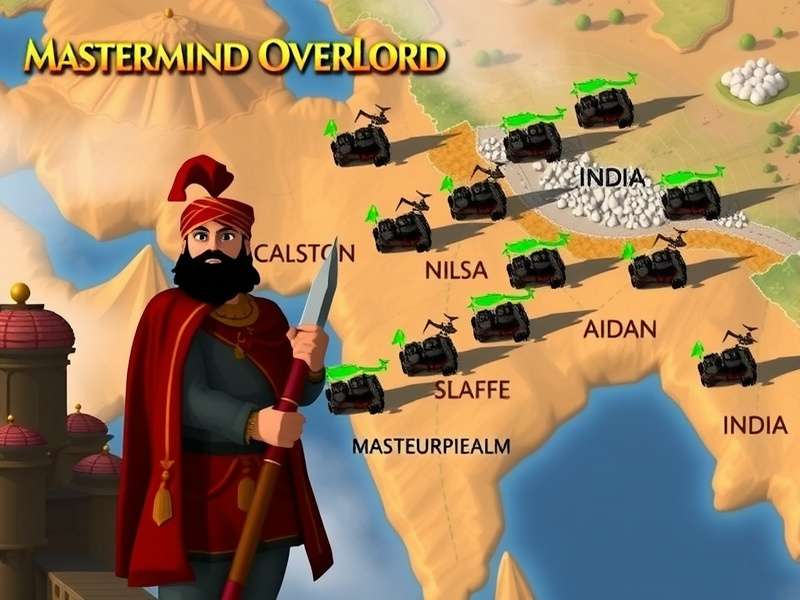
Mastermind Overlord’s map spans from the Khyber Pass in the north to Kanyakumari in the south, and from Gujarat in the west to Bengal in the east. Every region is meticulously crafted to reflect its real-life geography: the Thar Desert slows down armies (unless you have camel cavalry), the Ganges delta is prone to floods, and the Western Ghats are full of hidden valleys where rebels can hide.
The timeline is set in 1757, just after the Battle of Plassey—a pivotal moment when British influence began to spread. Players can either align with the East India Company (for access to modern weapons) or fight against them (to preserve Indian sovereignty). The game doesn’t shy away from tough historical choices, making it both entertaining and educational.
Factions
There are four playable factions, each with unique perks:
- Maratha Confederacy: Fast cavalry and cheap forts—perfect for hit-and-run tactics.
- Rajput Kingdoms: Strong infantry and high morale, but struggle with long supply lines.
- Sikh Empire: Elite warrior units and religious unity bonuses.
- Mughal Remnants: Access to ancient technology (like elephant artillery) but low population loyalty.
Non-playable factions include the British East India Company, French colonists, and tribal groups like the Bhils and Santhals, each with their own agendas.
Protagonist & Antagonist
The player’s protagonist is a young prince/princess who inherits a small kingdom after their father’s death. Their goal: unite India under one rule to fend off foreign invaders. The main antagonist is Lord Clive (based on Robert Clive), a ruthless British general who wants to conquer the subcontinent for the East India Company.
But Mastermind Overlord’s story isn’t black-and-white. Some Indian rulers ally with Clive for power, while others betray you even after swearing loyalty. The game’s tagline—“Your mind is your greatest weapon”—sums up the moral ambiguity of the era.
Characters 🎭
Major Playable Characters
Prithvi Singh (Rajput): A brave but impulsive prince from Mewar. His backstory involves avenging his father’s death at the hands of Mughal rebels. His special ability: “Rajput Valor” boosts infantry attack for one battle.
Kamala Bai (Maratha): A sharp-witted princess from Pune who uses diplomacy to win wars. Her special ability: “Diplomatic Genius” lets her form alliances for free once per game.
Ranjit Singh (Sikh): A young warrior who dreams of uniting the Sikh misls (confederacies). His special ability: “Khalsa Unity” increases troop recruitment speed.
Zara Begum (Mughal): A clever princess from Delhi who uses spies to outmaneuver enemies. Her special ability: “Mughal Espionage” reveals enemy troop positions for three turns.
Key NPCs
Lord Clive: The primary villain, a calculating British general who underestimates Indian rulers—until you prove him wrong.
Tantia Tope (Maratha General): A loyal advisor who can be recruited to lead your armies. He’s based on the real-life freedom fighter, adding historical depth.
Bhai Gurdas (Sikh Priest): A spiritual guide who provides cultural bonuses and warns you of upcoming rebellions.
Rani Lakshmi Bai (Jhansi): A non-playable ally who joins your cause if you help her defend Jhansi from British attack. Her inclusion pays homage to one of India’s most iconic freedom fighters.
Development 🛠️
Conceptualization
Mastermind Overlord was the brainchild of Ravi Patel, a game developer from Ahmedabad who grew up playing strategy games like Age of Empires but felt they lacked Indian representation. In a 2020 interview with Desi Gamer Magazine, Patel said: “I wanted to make a game where desi kids could see their history, their culture, and their heroes on screen—not just as side characters, but as the main protagonists.”
The initial concept was a board game, but Patel’s team at Desi Game Studios pivoted to mobile gaming after realizing most Indian gamers play on smartphones. Development began in 2017 with a small team of 8 people, funded by a Kickstarter campaign that raised ₹5 lakh (₹500,000) from desi gamers worldwide.
Cultural Influences
To ensure authenticity, the team consulted historians from Jawaharlal Nehru University (JNU) and local storytellers from Rajasthan and Punjab. They also incorporated folk music from different regions: Marathi lavani songs play in Pune, Punjabi bhangra beats in Amritsar, and Bengali baul music in Kolkata.
Even the game’s UI has desi touches: menus are designed like pothis (ancient Indian manuscripts), and notifications pop up as patras (letters) sealed with wax. The loading screens feature quotes from Indian leaders like Chanakya, whose Arthashastra (ancient strategy text) inspired many of Mastermind Overlord’s mechanics.
Technical Challenges
One of the biggest hurdles was optimizing the game for low-end Android phones, which are common in India. The team had to reduce the game’s file size from 2GB to 500MB without losing quality. They also added support for regional languages like Hindi, Tamil, and Bengali—something many international games overlook.
Another challenge was balancing historical accuracy with fun. For example, the team toned down the violence (to avoid a 18+ rating) but kept the strategic depth intact. As Patel put it: “We wanted the game to be enjoyed by 12-year-olds and 40-year-olds alike—no blood, just brainpower.”
Reception 🌟
Critical Acclaim
Mastermind Overlord received rave reviews from Indian gaming publications. GameZone India gave it 4.5/5 stars, calling it “the best Indian strategy game ever made.” TechCrunch India praised its “cultural authenticity and addictive gameplay,” noting that it “sets a new standard for desi game development.”
International reviewers also took notice: IGN gave it 4/5 stars, saying “Mastermind Overlord proves that Indian games can compete with global titles in terms of depth and creativity.” The game was nominated for “Best Mobile Strategy Game” at the 2020 Global Mobile Game Awards.
Player Feedback
Players love the game’s relatable scenarios and cultural references. A Reddit user from Chennai wrote: “When my crops failed in the monsoon, I felt like my own chacha (uncle) who lost his rice fields last year! That’s how real this game feels.” Another user from Ludhiana said: “Using bhangra music as a morale boost? Genius—my sister even started dancing to it!”
The only common complaint is the game’s occasional bugs, which the team has fixed through regular updates. Desi Game Studios is known for its responsive customer support, with most issues resolved within 24 hours—a rarity in the Indian gaming industry.
Awards
Mastermind Overlord has won several awards, including:
- 2019: Best Indian Game at the Desi Gaming Awards
- 2020: Most Innovative Mobile Game at the India Digital Awards
- 2021: Cultural Impact Award at the South Asian Game Awards
Community & Esports 🎮
Mastermind Overlord has a thriving community of players, with active Facebook groups (over 50,000 members) and Discord servers (20,000+ users). Fans create custom mods, share strategy guides, and even cosplay as the game’s characters at Indian gaming conventions like Comic Con India.
The game’s esports scene is growing rapidly, thanks to Daman Games’ support. The 2024 Mastermind Overlord World Cup (yes, a World Cup!) saw teams from India, Pakistan, Bangladesh, and the UK compete for a prize pool of ₹10 lakh (₹1,000,000). The final match between Team Mumbai and Team Lahore was a nail-biter, with Mumbai winning by a single resource point.
Desi Game Studios also runs “Mastermind Workshops” in schools across India, teaching kids about strategy and history through the game. As Patel says: “We want to make learning fun—if a kid remembers Chanakya’s tactics because of Mastermind Overlord, we’ve done our job.”
Legacy & Future 🔮
Mastermind Overlord has inspired a new wave of Indian game developers to create culturally authentic titles. Games like Chanakya’s Empire and Rani of Jhansi have followed in its footsteps, proving that desi-themed games can be both profitable and popular.
Desi Game Studios released Mastermind Overlord 2 in 2022, which expanded the map to include Nepal and Afghanistan, added new factions (like the Mysore Kingdom led by Tipu Sultan), and introduced a co-op mode. The sequel was even more successful than the original, with 3 million downloads in its first month.
Looking ahead, the team is working on Mastermind Overlord 3, which will feature 3D graphics and a open-world mode. They’re also planning a Netflix animated series based on the game’s lore, which is set to release in 2026. As Patel teased in a recent tweet: “The next chapter of Mastermind Overlord will be bigger, better, and more desi than ever!”
Frequently Asked Questions ❓
Is Mastermind Overlord free to play?
Yes! The game is free to download and play, with optional in-app purchases for cosmetic items (like new character skins or fort decorations). There are no pay-to-win mechanics—all gameplay features are unlockable without spending money.
Can I play offline?
Absolutely! The single-player campaign is fully offline, so you can play even when you’re on a local train with no internet (a lifesaver for desi commuters!). The multiplayer mode requires an internet connection, though.
Is Mastermind Overlord available on PC?
Yes, a PC version was released in 2021 on Steam and the Epic Games Store. It supports mouse and keyboard, as well as game controllers.
How can I join tournaments?
Tournaments are hosted regularly on the Daman Games website. Just create an account, link your Mastermind Overlord profile, and sign up for the next event!
Why Daman Games Recommends Mastermind Overlord 🎯
At Daman Games, we’re proud to publish Mastermind Overlord because it embodies everything we stand for: quality, authenticity, and fun. As India’s leading gaming platform, we’ve seen firsthand how the game has brought desi gamers together—whether they’re competing in tournaments or sharing tips on social media.
If you’re a fan of strategy games or Indian history, Mastermind Overlord is a must-play. It’s not just a game—it’s a celebration of our culture, our heroes, and our love for a good challenge. Join millions of players across India and become the ultimate Mastermind Overlord today!